
City Commission Approves Parks Master Plan After 17-Month Process

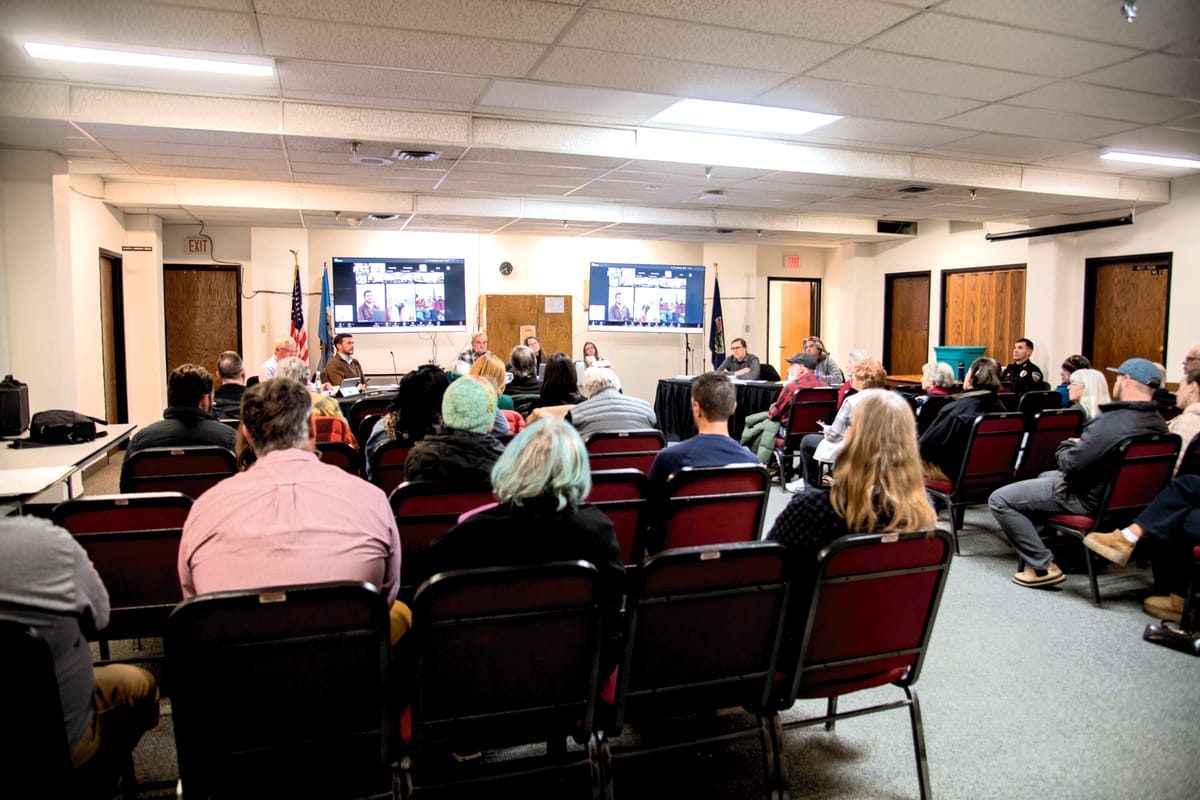
The controversial Parks Master Plan was adopted in unanimous fashion Tuesday night following extensive deliberation by the Livingston City Commission, led by City Manager Grant Gager. The document, developed over nearly 17 months, is intended to serve as inspiration for future projects aimed at improving the city parks system.
Nearly four years ago, roughly 1,600 Livingston residents provided key insights used to develop the growth policy and, in part, through that process, recommended city officials replace the previous Parks Master Plan—adopted in 2011, now rendered obsolete following Tuesday’s meeting. Gager first initiated this process by issuing a request for proposals in November 2023 though without response. The original scope of work was refined to meet budgeting needs and staff expectations before Gager disseminated a second request in Spring 2024.
“I will say the plan is well rooted in public comment that was received starting in late summer of 2024 and continued all the way up until about a month or so ago. It focuses on increasing accessibility and usability of the parks, but also maintainability. The City of Livingston’s parks receive close to 350,000 visitors a year… and that certainly takes a toll on the system,” Gager stated during opening remarks.
Devised by Stockwell (a civil engineering firm based in South Dakota), the document comprises nearly 150 pages describing the project in its entirety—processes, analyses, goals, and action planning—from beginning to end, including site visits and several community engagement initiatives designed to gather input from more than 1,000 stakeholders (heavy parks users, city parks employees and residents alike) through focus groups, a two-day charrette, and a needs assessment survey administered both online and in paper form. The firm, in collaboration with city officials, actively promoted engagement throughout Livingston—in schools and at the public library and senior center—garnering 301 survey responses and widespread participation in open forums hosted over the course of several months.
“We had put together Facebook posts, printed hard copies, put notice in any publications or newspapers. There certainly was an effort to get as much feedback from anybody and everybody as much as possible,” explained Stockwell consultant Dave Locke, who presented the report.
Survey results were compiled and presented to city officials and community members earlier this year, followed by preliminary recommendations and ongoing feedback solicitation, the latter of which was implemented prior to developing the final report.
Much of which emerged in the report reflected input provided by the community—that the existing infrastructure and facilities should be maintained, yet at a higher standard. Parks inventory and analysis, outlined in chapter three, provides comparisons between the city’s current facilities and standards for communities with similar population sizes prescribed by the National Recreation and Park Association (NRPA), which, for instance, states that “A park system, at a minimum, should be composed of a ‘core’ system of park lands, with a total of 12.6 to 20.9 acres of developed open space per 1,000 population.”
Livingston’s 17 parks, classified using categories defined by the NRPA (neighborhood parks, community parks, sports complexes, special use parks and nature preserves/open space), span 18 acres per 1,000 residents, comfortably achieving the aforementioned standard and exceeding the median, according to Locke, who also indicated that trail systems and outdoor amenities generally met established median standards, and that city parks are reasonably sufficient for serving the community at large.
Several areas for improvement, however, were identified in the report, including the overall parks distribution pattern throughout the city, which lies primarily along the Yellowstone River and in the north/northwest section of town. On the other hand, the central neighborhood, located just north of the railroad tracks, is largely underserved and may benefit from an additional park, according to the report.
Other recommendations include extending and connecting the trails systems, balancing parks maintenance resources and assets, improving ADA accessibility, increasing awareness of system facilities and programs, and enhancing natural areas, as well as individualized upgrades for all 17 parks. Locke also discussed the potential for developing a recreation foundation focused on connecting the city with donors to help offset improvement costs with private dollars. Implementing a replacement schedule for parks amenities, he added, could be used to stagger projects and reduce annual expenses. Project descriptions, timelines, priority ratings and capital cost estimates for each project were neatly organized into digestible tables for ease of use and comprehension.
Preceding public commentary, the commission preemptively addressed several pertinent issues previously surfaced during past meetings and on social media platforms by imploring Gager to clarify process-related considerations and various implications of the plan, specifically project implementation. Vice chair Melissa Nootz, for example, asked Gager to reiterate community outreach strategies employed by Stockwell to ensure such efforts were both comprehensive and equitable—crucial considerations, she explained, during the contracting phase.
Gager described the intricate outreach process at length before turning his attention to other prominent concerns cited by Nootz, largely related to tree removal and major infrastructure modifications like paved parking lots and street closures. He again emphasized that all recommendations are merely aspirational, subject to review by future commissions and the community at large, as well as systemic, logistical and funding considerations to promote cost efficiency and public satisfaction—all prior to implementation.
“This is one thing I have learned [as a commissioner], is that plans are not literal. Because that is more prescriptive than we can do at the commission level. We tend to vote on specific things when they come in front of us, but plans tend to be more broad,” Nootz shrewdly remarked.
As anticipated, the plan was met with a degree of resistance by a relatively minute contingent of dissenters—some of which were the usual suspects, nailing their proverbial 95 theses to the door—this time, a petition containing 420 signatures beckoning the commission to delay voting until the first quarter of 2026, presumptively awaiting the arrival of three new commissioners elected in November and the inevitable ideological shift in municipal government.
One resident brazenly alleged that departing members of the commission were “lame ducks” pushing the plan through before the new commissioners could be seated. She further disparaged the needs assessment survey, calling it “long, complicated, and confusing,” insisting that 300 responses indicated a failure in outreach efforts by the city.
A second resident questioned whether devoting funding to improving city parks should be prioritized within the community, citing mental health and roadways as more pressing issues. This sentiment was echoed once more regarding the railway overpass. Others constructively critiqued specific aspects of the plan, such as the closing of McGee road, supplementing parks with artificial surfaces like turf and rubber, and building a parking lot behind the civic center.
Some attendees, conversely, voiced appreciation for the city manager and commission and lauded the plan. “I commend the city and commission in recognizing that our priorities have changed since 2011 and that the city has matured through the first quarter of the 21st century. I appreciate how you have listened and responded to public priorities and concerns. So, I want to express my gratitude to the commissioners for the thoughtful process you have engaged in and continue to engage in with regard to the plan. I urge the commissioners to move forward with parks plan without further modification at this time. Doing so will enable the city to pursue grants and other opportunities for funding and prevent residences from bearing the cost of potential maintenance and improvements through taxes…” exclaimed Mary Strickroth, co-founder of the local Indivisible Park County chapter, a national political advocacy nonprofit.
“There is some concern about moving forward with this. I am in favor of this. But it’s really obvious that a new commission can limit the changes or money spent towards this project. So, that check and balance is always in place. And I also know, having been here for a long time, some of the improvements that have taken place in this community have been paid for by private funding, like the recreation center… I also know there is a need for fiscal responsibility, meaning that we can’t make an improvement that we can’t afford to maintain… and I know we have a really tight staff, I think you guys are doing a phenomenal job, I’m really impressed. But I think the checks and balances are there. A new commission comes in and if something is ridiculously expensive, it’s not going to happen. I don’t understand what the back and forth is about,” said Livingston resident Colin Davis.
Deliberation then began with Commissioner James Willich, who, with reservations regarding the McGee street and public pool closure recommendations detailed within the plan, defended community outreach efforts by Stockwell Engineering and city officials. He noted that up to 1,100 citizens provided feedback throughout the entire process, many of which had lived in Livingston for 20 years or more, whereas nearly one third of petitioners lived outside of city limits—a non-exclusionary factor, he says, yet nonetheless worthy of consideration. “I am not totally convinced that we haven’t heard from at least a slice of everybody, because that’s how statistics work,” he remarked.
The conversation then turned to funding priorities, an issue among many addressed by Commissioner Torrey Lyons as he commenced speaking. ‘I think that [consideration] is valid when we have major capital projects in the pike. I will direct that attention to the fact that we have funded this plan, it sounds like, to the tune of around $50,000. I would expect if we were to do an additional iteration of the plan, that it would cost more money or require a new contract,” a statement clarified by Gager per request.
“There is included in the scope of work a bit of final revision based on whatever comments we may have received here. And so, to the extent that there are some minor comments or revisions from the commission this evening, they are covered in the original scope of work. To the extent we were to engage upon a larger rewrite, that could be new procurement. More than likely it would be an amendment to the current contract unless it was the commissions will to just disengage from Stockwell. I would come back for a contract amendment or seek direction and approval for a contract amendment if the changes are significant.”
Both Lyons and Commissioner Karrie Kahle, whose respective terms ends on December 31st, addressed lame duck accusations. Kahle, who spoke on the importance of the plan for establishing a foundation through which private funding may be sought, launched an impassioned haranguing in response to these otherwise baseless claims. “I was elected by the people of the city of Livingston. I made a commitment to the people of Livingston to fulfill my term. I am here doing it and will do it until the very end. I would not have spent my entire holiday weekend reading this packet in preparation for this meeting if I am not committed to this job…”
“Since I’m a lame duck, I’ll keep it short,” quipped Chair Quentin Schwarz. “I think my fellow commissioners have really made great points on this. This whole thing… a lot of people were fed a lot of misinformation and that’s a shame. This is aspirational, as commissioner Kahle said. These are recommendations. None of this is written in stone… We’re not trying to pull the wool over anybody’s eyes. We have been working on this for 17 months. This is not new. It wasn’t just sprung on us. So, I am sorry a lot of people went to a lot of work to collect signatures and I’m sorry that you had the misinformation that you did, that this is written in stone, and it’s not.”
A motion was made by Willich to approve the Parks Master Plan, seconded by Kahle. All five members then voted in favor of adopting the plan. The commission continued late into the evening discussing changes to zoning code ordinances.
For further information, please use the following link to access a recording of the meeting: https://www.livingstonmontana.org/citycommission/page/city-commission-meeting-237.